HAEC PARS UNIVERSI
This spot, this corner, this part of the universe

Thursday, June 10, 2010


Saigon is fast, energetic, confusing, chaotic, colorful and very much an in-your-face kind of city. This was the first time I left the comforts and familiarity of my own country and I dove right in. The first thing I noticed about Ho Chi Minh is that every inch of every street is riddled with motorcycles. They own them. They rent them. They hire them. And they’re good drivers, too. On a busy roundabout, cross the street and notice how each motorcycle will avoid you.


Interesting, really, how different this city is, and we are literally one sea apart. What is more interesting, downright bizarre, is how even though Vietnamese and Filipinos are both Southeast Asians, you can clearly distinguish one from the other. We were walking on one side of the road and each and every motorcycle driver and passenger were eerily looking at us. They clearly knew we were not one of them.


And then, there’s the food. If only for the food, I would return to Saigon many times over. Their version of fast food is one delicious, healthy and soothing bowl of pho (pronounced fah, not foe, stupid foreigner). No kidding. I think their version of Jollibee or McDonalds is Pho 24. It’s pho fast food style. And it’s good. Every other street corner has Pho 24. No wonder the Vietnamese are smaller and learner. They eat healthier.


There is one other thing you will notice about Ho Chi Minh. Coffee is a way of life. What is even more noticeable is that they prefer their coffee iced. Ca phe sua da, they call it. Iced milk coffee. Even in the morning, they want their iced coffee fix. We saw business men sitting down on a local café and discussing matters over cold glasses of their sweet and strong coffee.


One café I would definitely recommend is one right by the Saigon River. Café Park Bach Dang is how I found out about it on the Internet. It had a different name, however, when we got there. No matter. It is the only café on the dock. The best part about it is that the café is locals only. We were the only tourists there, which the staff and the patrons found quite unusual. Try to come around 5 or 6 in the evening. Ships, junks and floating restaurants with all their glittering lights will lazily pass by you.


The hotel we stayed in, as recommended by Lonely Planet, of course, is An An 2. The hotel, or kach san, is right in the heart of Saigon’s backpacker’s district. We came in at around 2 a.m. on a weekday and our area was still full of people, mostly foreigners. Music was playing loudly and lights flashing brightly. It is energizing to say the least.


To live in Saigon is to shop in Saigon. Be warned street-smart shopper, though. The Saigonese will loathe you for haggling. Ben Thanh Market, and its surrounding streets, in the center of town was where we primarily went. The stall vendors are aggressive and unforgiving. Be ready to buy if you want to browse through their merchandise. Either one of two things will happen. One, they will drive you away as you no longer mean business for them. Or two, they will claw at your arms and keep you prisoner unless you take out your wallet.


There are good finds, though. A lot of them. Mostly backpacks, shoulder bags, purses, etc. Things that will sell for 4,000 pesos here would cost around 1,500 pesos there. Factory rejects and overruns, of course. But unless people look closer, nobody will know the difference, won’t they?


With a city as vibrant and vivid as Saigon, one could expect art to be just as lively. Fortunately, it is. We found one shop right along busy Bui Vien Street in the backpacker’s district. Mad in Indosin: Papaya T-Shirt is the name of the store. Yes, they sell t-shirts, too. The owner and his friend, the artist, are both French expats. The work, I think, does justice to the city. The art there, like Saigon, is like drawings in a comic book, brilliant and colorful.


Saigon will not be for the faint-hearted. Its streets are chaotic. Life is energetic. You will not expect soft-spoken and down-to-earth people to live here. And they don’t. Rightfully so. The Saigonese are not the politest people on Earth, I can tell you that much. You will have to learn their ways and mannerisms before you can appreciate them. Make no mistake about it. They will stress you out. With their loud voices and vigorous gestures, they will get to you. But that is just what makes their city as alive as it is. I will not want Saigon to be any different.


Related Posts:

11-Jun
Vietnam: Sights in Saigon
12-Jun
Vietnam: Tunnels of Cu Chi


Labels: , , ,

See the rest of the post here...

Tuesday, June 8, 2010


Just woke up 4 p.m. Tuesday in Manila. I am currently transferring the photos I took from this trip onto my notebook. On any given trip, I average at about 600 to 700 photos. For this trip, however, it totaled to almost 2,400 pictures.

Yet, I still don't feel that that figure was enough to have captured everything. Before sifting through the photos, I feel like I have to sift through all the things I saw, I learned, I felt, I heard, I smelled, I tasted. All the experiences I had during that five-day stay abroad.

Right now, if people come up to me and abruptly asks me, "How was your trip?" I will not know what to say. I will not know where to begin. There are just too many things. I am getting all emotional just thinking about each of them.

During the trip, a friend said that when she closed her eyes, the places and landscapes she saw still lingered. I think that just started happening to me today. It is bitter-sweet to say the least. You love that you have that, yet you feel sad that you're already back.

Which is why I am making a promise to myself to continue traveling, to continue getting on the road. There is just no greater feeling.

Labels: , , , , , ,

See the rest of the post here...

Thursday, May 20, 2010


There was another thing that I thought was missing in my Philippine travels. (Yes, I'm speaking as if I've traversed this country north to south, east to west. Haha.) But yeah, I have never been to a small-town fiesta or pista. Not since I was a kid, at least.

Bata sa Pahiyas

The last pista I remember going to was in a small town in Baras, Rizal. I was still a kid back then. From the very few things I recall, the one thing that stands out is this palpable "pista" air. People were on the streets, decorating their homes, cooking their handa with their big casseroles and woks. It was joyous and somehow, it was all very Pinoy.

Kiping Lantern sa Pahiyas

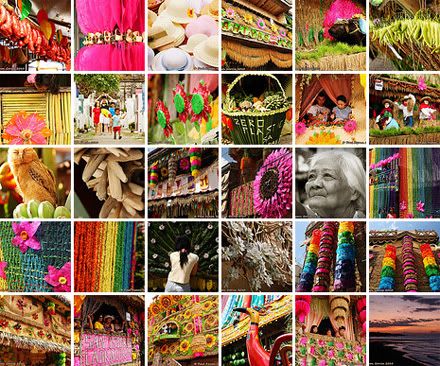
Thankfully, I got to breathe that air again last week. A football teammate of mine was from the Quezon province. And around mid-May, a little town in the province, Lucban, explodes into all things bright and colorful into what is now known throughout the country as the Pahiyas Festival.

Rainbow House sa Pahiyas

We left the city really early, around 3 a.m., passing through the eastern route (the Rizal-Laguna-Quezon highway). This proved to be a very wise decision. Had we taken the southern route (the SLEX route), we would have been stuck in traffic and the drive that usually took three hours would have become seven.

Longganisang Lucban

We got into town really early and dove right in. We had breakfast at a place called Buddy's. I had Longganisa Lucban in Lucban! Nothing can really compare to that. I enjoyed the food even though the place was packed. Literally. Well, the whole town was already packed. And it was only 7 a.m.

Pahiyas

After breakfast, it was time for the walkathon. That was the only way to see all the Pahiyas-decorated houses in town, really. You had to walk through Lucban's small and narrow streets. Might as well really. A van, a car or even a trike would not do you any good. The streets are littered with people.

Pahiyas

I like that my teammate knew where to start walking. We started with the big Spanish Lucban church, of course, and wound our way through the town going from very rustically-decorated houses to big, bright and rainbow-colorful three-story buildings.

Pahiyas

It was all very festive. Every part of the family, even those from out of town, of course, got into the pista atmosphere. It helped that thousands of tourists, including us, were there celebrating with the locals.

Sementeryo ng Lucban

Around midday, we were tired from the walking. We were not really that hungry. We were munching on the street foods while we did the walkathon: from cotton candy, to pancit habhab, to samalamig drinks and even strawberry-flavored scramble.

Not Very Pahiyas Flowers

Since our ride was parked way out of town (since it was impossible to park inside the town), we still had to walk another kilometer or so. From there, we headed to Sariaya, to the coast of Quezon. I will admit. The sea on this part of the country is not that picturesque. Still, it was the first time I met the Pacific Ocean. It was saying hello. It'd be rude if I just walked away, wouldn't it?

Playa sa Sariaya

~ 0 ~

More photos in my Flckr set:

Pahiyas


Labels: , , , , , ,

See the rest of the post here...

Monday, May 3, 2010


Our route to Mount Pinatubo took us to Capas, Tarlac. Capas is a very historical town in Central Luzon. This is the site of Camp O'Donnell, an American army facility turned Japanese prisoner camp during World War II. This was the final stop in the historic Bataan Death March.

Capas Shrine

In memory of this episode in Philippine history, what now stands in the site is a war memorial dedicated to the Filipino and American soldiers who endured and fell throughout the 97-kilometer march. The site is now known as the Capas National Shrine or the Paggunita sa Capas.

Capas Shrine

The shrine is 54 hectares of parkland. In the center is a 70-meter obelisk surrounded by a black marble wall on which lay inscribed the names of the soldiers known to have died in Capas as a result of the death march. Thousands suffered the brutality and the inhumanity throughout the march. Many died en route to the camp.

Capas Shrine

It's by visiting places like these you get a sense of who you are and what your place is. You become humbled by the enormity of it all. The things you read in textbooks back in grade school start to mean something. They're not just words. They're people and places that changed the world as we know it.

Capas Shrine

My travel companions commented on the way home that we were lucky we weren't born during the war. I agree. At the same time, there is this huge responsibility for us. At the very least, we should never forget events like these, no matter how horrible and gruesome they may be. They are part of history, our history, our story. More than anything, it is that we should always remember.

Capas Shrine


Labels: , ,

See the rest of the post here...

Sunday, April 25, 2010


There was one more thing we were to do in Camiguin before we make our way back to the airport, and then back to being drones in our mundane worlds. We had to see Camiguin's one and only white-sand beach, White Island.

Bahay Bakasyunan Sunrise

We had to get up early for this one. Our flights back to Manila/Cebu departs around 2 p.m. that day and the Cagayan de Oro airport was in another island, literally. It would take us at least 4 hours to get there from Bahay Bakasyunan in Camiguin.

Bahay Bakasyunan Sunrise

Anyway, some of us, myself included, were a little apprehensive about forcing ourselves to get up that early. We were in vacation after all. But knowing we had to make the most out of our short stay, we got up and headed out. Totally worth it. Totally. The hues of the Mindanao sunrise that day was spectacular.

Early Morning at White Island

White Island is on the western side of Camiguin. Our hotel was on the eastern coast. The sun was high up by the time we got to the boats that will take us there. The small island can be seen from Camiguin's western coast. The boat ride will take you no more than 30 minutes.

Early Morning at White Island

White Island is actually only this strip of white sand, this sandbar, in the middle of the sea. The island has no shade, no trees, no land. Just sand. It still fascinates me how fine and white the sand was compared to how coarse and black the beaches are in Camiguin mainland.

Early Morning at White Island

We had a little swim, our photos taken (yes, jump shots included). It was our final relaxed moments before we headed back. Before we even got back to the city, though, stress crept its way up our faces. We ran a little late that five minutes later, we would have missed our flights.

Early Morning at White Island

All's good, though. We knew everything was worth it. There were eleven of us in this trip. Successful, I should say. And we never really realized it but we were in fact celebrating the twelve years that we've known each other. Twelve years. Twelve freakin' years! That's a long time. We did not know it back then but what we started in high school was going to stay with us for the rest of our lives. You couldn't get a friendship more real than that.

Labels: , , , ,

See the rest of the post here...
Wednesday, April 21, 2010


Having grown up during the 1990's, my view of Mt. Pinatubo has always been that of volcanic disaster in monumental proportions. Its June 1991 eruption destroyed much of the region, ending a way of life for many of the nearby residents, impacting global environment in its aftermath.

Pinatubo Caldera

Now, almost two decades later, its 1991 caldera has formed a brilliant blue-green lake. Lake Pinatubo, they call it. Seeing it, how serene and peaceful it looks, you almost forget how much power it wields.

Rough Riding

The idea of seeing it for myself came about last year when it became a popular site for mountain hiking and trekking. Some research told me how easy it was to organize a trip. It became even easier when I saw that local travel groups offered to take people there. So we signed up and away we go.

Pinatubo Trek Jump-off

The whole adventure begins in the Pinatubo tourism office in Capas, Tarlac. From there, you take this 4x4 jeep. Indispensable, really, as it can negotiate its way through the desert-like lahar wasteland you need to pass through to get to the trek's jump-off point.

Rubber Tramp

Getting to the caldera is easier now. Just a few years back, the trek would take one to two hours, as opposed to the 20 to 30 minutes it takes today. Back then, you spend more time on foot, than on the 4x4. What changed the whole game is this road they call the Pinatubo skyway.

Rugged Central Luzon

The vast lahar wasteland ends at some point and all you have is this valley, this canyon, whose very rough terrain is only passable by foot. Thus, they paved their way on top of the mountain range, creating a road on the plateau--the skyway--bringing the trek's jump-off point closer to the destination.

Trail to Pinatubo

The trek is easy enough. You can even follow the very clear trail to the crater by yourself. For those uninitiated in the ways of mountaineering though (such as myself), it will best to go with the guide the tourism office dispatches with the 4x4.

Take Nothing

The morning we hiked our way to the crater, the weather was a little foreboding. The air was a bit cold and definitely wet. And there was this mist over the mountain peaks. Strangely enough, it heightened the whole experience. For me, at least.

Mist

The short trek was well worth the pay-off, excessively, if I may say so. Especially when that which will welcome you is this grand scenery, this beautiful landscape you'd be hard-pressed to find anywhere else in the country. At this point, the best thing to do is to sit down and take all of it in.

Pinatubo Caldera


Pinatubo Caldera


Pinatubo Caldera


Pinatubo Caldera


Pinatubo Caldera


Labels: , , , , , ,

See the rest of the post here...

Sunday, April 4, 2010


Upon arrival on Northern Mindanao's island paradise Camiguin, we did not waste any time laying around. After checking in Bahay Bakasyunan, we hopped on our van and headed off to see a "spring" and a "fall." Ardent Hot Springs and the Katibawasan Falls.

Katibawasan Falls

The road to Katibawasan Falls is a treacherous one. The waterfall is hidden somewhere in the island's interiors surrounded by a tropical rainforest. At some point, the pavement disappears and all you have is this dirt road on the side of a mountain. It is all worth, though. The waterfall is lush and beautiful.

Katibawasan Falls

Katibawasan is a really high waterfall. As you approach it, you will hear the sound of the water falling on the side of the cliff. And as you stand before it, cold wet wind will literally blow onto your face. Not surprisingly, the water here is very cold, like fridge cold. You'll have to suffer through it, though, to get near the spot where the water touches the ground. Being there, you will find yourself standing before something awesome and breathtaking.

Katibawasan Falls

Come to think of it, it is the first waterfall that I have ever seen in my life. Maybe that's why it took my breath that much. I'm really more of a "sea" person and I haven't done much forest exploring or mountain hiking. Only now do I realize that this was another first for me. That's good.

Ardent Hot Springs

The other place we went to is called Ardent Hot Springs. They have a restaurant here so we ate here for lunch. They serve hearty Filipino dishes. So be prepared to stuff your faces. Anyway, as I am not really a big fan of hot springs, I didn't do any bathing or swimming. Instead, I practiced my slow-shutter-ethereal-water-photography or whatever it's called. :)

Ardent Hot Springs


Labels: , , ,

See the rest of the post here...

<< Newer Posts       Older Posts >>