HAEC PARS UNIVERSI
This spot, this corner, this part of the universe

Saturday, June 12, 2010


During the Vietnam War, members of the Viet Cong guerrilla had to find safe hiding places and a way for them to go around without the American-backed South Vietnamese army detecting their every move. This necessity was what made the guerrilla army invent the now infamous Cu Chi Tunnels.


Located at the outskirts of Saigon, the Cu Chi district was where the Viet Cong chose to create their highly complex network of tunnels and bunkers. That way, our guide explained, they won't be too far from Saigon's city center but far enough for them to securely establish communication channels with their North Vietnamese backers.


The photo above shows just how complex the tunnel system was. All the area covered by the red color was the ground where the Cu Chi tunnels were dug. The black lines covering the red area are the tunnels. Right beside them is the Mekong River (in blue) which, due to the hilly topography of the Cu Chi district, never flooded the underground hideouts.


That was then, however. Now, the Cu Chi Tunnels have been made into a tourist attraction, sort of an outdoor museum, complete with film showing and exhibits. It is in fact one of the more touristy things to do in Saigon. Travel agencies will arrange for a bus and a guide to take you to the museum complex for around 7 to 8 USD, entrance passes included.


One of the more stand-out exhibits are the very creative traps concocted by the Viet Cong guerrilla. They have different sorts of booby traps, mostly involving sharp metal rods, designed to impale body parts and inflict the maximum pain onto their victims. They are not simple contraptions, no. Some would make you realize that these people really thought about the mechanics of pain. Not exaggerating.


Other exhibits will include that of museum workers demonstrating how life would have been back in the old days. A woman making rice paper, a man crafting and repairing sandals and footwear, old missiles and shells (which hopefully have been cleaned of their hazardous materials), etc.


And of course, there are the tunnels themselves. Some parts of the tunnel system have already been enlarged so as to accommodate even western tourists. One has to remember though that the Vietnamese are quite lean and thin. Their idea of "enlarged" is still quite small.

People with claustrophobia and weak knees are discouraged to go in. I understood why, actually. It can get pitch dark on some areas and at some point your knees will begin to strain from all the crouching.

All in all, I do think it is worth experiencing. One just has to remember though even if it is the actual site of the tunnels, what stands there now is a museum, a very touristy amusement park even. Surely, the tunnels now are far from what the Viet Cong guerrilla army used to have. One needs to realize that going into the whole Cu Chi Tunnel experience.

Related Posts:

10-Jun
Vietnam: Surviving Saigon
11-Jun
Vietnam: Sights in Saigon


Labels: , , , , ,

See the rest of the post here...

Friday, June 11, 2010


This trip to Vietnam is the first time I ever got out of the country. So hell yes, I'm going all-touristy. What better way to do that but to walk around Saigon and see the city's history through its architecture, from communist to Roman gothic to French colonial.


Walking around Saigon to visit the more touristy sites is not that difficult. The only setback is the heat. The tropical sun can be unforgiving. So wear light clothes and comfortable shoes. Start at the center, at Ben Thanh Market, and go northeast. That will take you to three of Saigon's landmarks: the palace, the basilica and the post office.


First stop, the communist palace. The Reunification Palace was the home and office of the President of South Vietnam during the war. The place is historically significant to say the least. On April 30, 1975, a North Vietnamese Army tank bulldozed through the palace's front gates, signaling the fall of Saigon and the end of the Vietnam War, almost twenty years after it started.


Next stop was Saigon's Roman gothic cathedral, the Saigon Notre Dame Basilica. From the Reunification Palace's front gates, you will see a glimpse of the church. Just cross the beautiful park separating the two and that's it. That is another thing to say about Saigon, by the way. Parks, they have lots of it. Well-maintained, too. And the trees in the parks, they use big tall ones.


Looking at the church would tell you that its design was very much European. Naturally so as it was built by the French during their colonial rule over much of Indochina. The church is beautiful inside and out. And the locals are fully aware of it. The morning we went there, there were at least three couples having their wedding pictorials in and around the cathedral.


Inside the cathedral, you will see little tombstones plastered on the wall. I am not really sure where the burial places are but the tombstones are there, surrounding the stained glass. The epitaphs on the tombstones were mostly in Vietnamese, some in French. Select ones would be in Portuguese and some other European language.


Right beside the Saigon Notre Dame Basilica is the very French colonial Saigon Central Post Office. The design was made by no other than Gustave Eiffel himself. This was my favorite of the three. The building had this old world, colonial charm which I very much appreciate.


When you go inside, it becomes easy to imagine how was it like back then, how alive it was when the French colonialists were still in Saigon. Messengers dropping and getting posts, journalists turning in the day's news. Many years have passed since the French has left Saigon. Yet, the post office felt very much alive.


There is much more to see in and around the city. Pity we only had half a day to go around. Their museums looks promising. With a history as colorful and as troubled as theirs, museum-hop would be a viable activity. I think we covered enough, though, as much as our time would allow us. I would definitely come back to see more.


Related Posts:

10-Jun
Vietnam: Surviving Saigon
12-Jun
Vietnam: Tunnels of Cu Chi


Labels: , , ,

See the rest of the post here...

Thursday, June 10, 2010


Saigon is fast, energetic, confusing, chaotic, colorful and very much an in-your-face kind of city. This was the first time I left the comforts and familiarity of my own country and I dove right in. The first thing I noticed about Ho Chi Minh is that every inch of every street is riddled with motorcycles. They own them. They rent them. They hire them. And they’re good drivers, too. On a busy roundabout, cross the street and notice how each motorcycle will avoid you.


Interesting, really, how different this city is, and we are literally one sea apart. What is more interesting, downright bizarre, is how even though Vietnamese and Filipinos are both Southeast Asians, you can clearly distinguish one from the other. We were walking on one side of the road and each and every motorcycle driver and passenger were eerily looking at us. They clearly knew we were not one of them.


And then, there’s the food. If only for the food, I would return to Saigon many times over. Their version of fast food is one delicious, healthy and soothing bowl of pho (pronounced fah, not foe, stupid foreigner). No kidding. I think their version of Jollibee or McDonalds is Pho 24. It’s pho fast food style. And it’s good. Every other street corner has Pho 24. No wonder the Vietnamese are smaller and learner. They eat healthier.


There is one other thing you will notice about Ho Chi Minh. Coffee is a way of life. What is even more noticeable is that they prefer their coffee iced. Ca phe sua da, they call it. Iced milk coffee. Even in the morning, they want their iced coffee fix. We saw business men sitting down on a local café and discussing matters over cold glasses of their sweet and strong coffee.


One café I would definitely recommend is one right by the Saigon River. Café Park Bach Dang is how I found out about it on the Internet. It had a different name, however, when we got there. No matter. It is the only café on the dock. The best part about it is that the café is locals only. We were the only tourists there, which the staff and the patrons found quite unusual. Try to come around 5 or 6 in the evening. Ships, junks and floating restaurants with all their glittering lights will lazily pass by you.


The hotel we stayed in, as recommended by Lonely Planet, of course, is An An 2. The hotel, or kach san, is right in the heart of Saigon’s backpacker’s district. We came in at around 2 a.m. on a weekday and our area was still full of people, mostly foreigners. Music was playing loudly and lights flashing brightly. It is energizing to say the least.


To live in Saigon is to shop in Saigon. Be warned street-smart shopper, though. The Saigonese will loathe you for haggling. Ben Thanh Market, and its surrounding streets, in the center of town was where we primarily went. The stall vendors are aggressive and unforgiving. Be ready to buy if you want to browse through their merchandise. Either one of two things will happen. One, they will drive you away as you no longer mean business for them. Or two, they will claw at your arms and keep you prisoner unless you take out your wallet.


There are good finds, though. A lot of them. Mostly backpacks, shoulder bags, purses, etc. Things that will sell for 4,000 pesos here would cost around 1,500 pesos there. Factory rejects and overruns, of course. But unless people look closer, nobody will know the difference, won’t they?


With a city as vibrant and vivid as Saigon, one could expect art to be just as lively. Fortunately, it is. We found one shop right along busy Bui Vien Street in the backpacker’s district. Mad in Indosin: Papaya T-Shirt is the name of the store. Yes, they sell t-shirts, too. The owner and his friend, the artist, are both French expats. The work, I think, does justice to the city. The art there, like Saigon, is like drawings in a comic book, brilliant and colorful.


Saigon will not be for the faint-hearted. Its streets are chaotic. Life is energetic. You will not expect soft-spoken and down-to-earth people to live here. And they don’t. Rightfully so. The Saigonese are not the politest people on Earth, I can tell you that much. You will have to learn their ways and mannerisms before you can appreciate them. Make no mistake about it. They will stress you out. With their loud voices and vigorous gestures, they will get to you. But that is just what makes their city as alive as it is. I will not want Saigon to be any different.


Related Posts:

11-Jun
Vietnam: Sights in Saigon
12-Jun
Vietnam: Tunnels of Cu Chi


Labels: , , ,

See the rest of the post here...

Tuesday, June 8, 2010


Just woke up 4 p.m. Tuesday in Manila. I am currently transferring the photos I took from this trip onto my notebook. On any given trip, I average at about 600 to 700 photos. For this trip, however, it totaled to almost 2,400 pictures.

Yet, I still don't feel that that figure was enough to have captured everything. Before sifting through the photos, I feel like I have to sift through all the things I saw, I learned, I felt, I heard, I smelled, I tasted. All the experiences I had during that five-day stay abroad.

Right now, if people come up to me and abruptly asks me, "How was your trip?" I will not know what to say. I will not know where to begin. There are just too many things. I am getting all emotional just thinking about each of them.

During the trip, a friend said that when she closed her eyes, the places and landscapes she saw still lingered. I think that just started happening to me today. It is bitter-sweet to say the least. You love that you have that, yet you feel sad that you're already back.

Which is why I am making a promise to myself to continue traveling, to continue getting on the road. There is just no greater feeling.

Labels: , , , , , ,

See the rest of the post here...

Thursday, May 20, 2010


There was another thing that I thought was missing in my Philippine travels. (Yes, I'm speaking as if I've traversed this country north to south, east to west. Haha.) But yeah, I have never been to a small-town fiesta or pista. Not since I was a kid, at least.

Bata sa Pahiyas

The last pista I remember going to was in a small town in Baras, Rizal. I was still a kid back then. From the very few things I recall, the one thing that stands out is this palpable "pista" air. People were on the streets, decorating their homes, cooking their handa with their big casseroles and woks. It was joyous and somehow, it was all very Pinoy.

Kiping Lantern sa Pahiyas

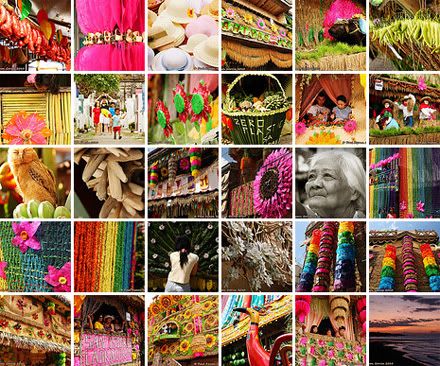
Thankfully, I got to breathe that air again last week. A football teammate of mine was from the Quezon province. And around mid-May, a little town in the province, Lucban, explodes into all things bright and colorful into what is now known throughout the country as the Pahiyas Festival.

Rainbow House sa Pahiyas

We left the city really early, around 3 a.m., passing through the eastern route (the Rizal-Laguna-Quezon highway). This proved to be a very wise decision. Had we taken the southern route (the SLEX route), we would have been stuck in traffic and the drive that usually took three hours would have become seven.

Longganisang Lucban

We got into town really early and dove right in. We had breakfast at a place called Buddy's. I had Longganisa Lucban in Lucban! Nothing can really compare to that. I enjoyed the food even though the place was packed. Literally. Well, the whole town was already packed. And it was only 7 a.m.

Pahiyas

After breakfast, it was time for the walkathon. That was the only way to see all the Pahiyas-decorated houses in town, really. You had to walk through Lucban's small and narrow streets. Might as well really. A van, a car or even a trike would not do you any good. The streets are littered with people.

Pahiyas

I like that my teammate knew where to start walking. We started with the big Spanish Lucban church, of course, and wound our way through the town going from very rustically-decorated houses to big, bright and rainbow-colorful three-story buildings.

Pahiyas

It was all very festive. Every part of the family, even those from out of town, of course, got into the pista atmosphere. It helped that thousands of tourists, including us, were there celebrating with the locals.

Sementeryo ng Lucban

Around midday, we were tired from the walking. We were not really that hungry. We were munching on the street foods while we did the walkathon: from cotton candy, to pancit habhab, to samalamig drinks and even strawberry-flavored scramble.

Not Very Pahiyas Flowers

Since our ride was parked way out of town (since it was impossible to park inside the town), we still had to walk another kilometer or so. From there, we headed to Sariaya, to the coast of Quezon. I will admit. The sea on this part of the country is not that picturesque. Still, it was the first time I met the Pacific Ocean. It was saying hello. It'd be rude if I just walked away, wouldn't it?

Playa sa Sariaya

~ 0 ~

More photos in my Flckr set:

Pahiyas


Labels: , , , , , ,

See the rest of the post here...

Monday, May 3, 2010


Our route to Mount Pinatubo took us to Capas, Tarlac. Capas is a very historical town in Central Luzon. This is the site of Camp O'Donnell, an American army facility turned Japanese prisoner camp during World War II. This was the final stop in the historic Bataan Death March.

Capas Shrine

In memory of this episode in Philippine history, what now stands in the site is a war memorial dedicated to the Filipino and American soldiers who endured and fell throughout the 97-kilometer march. The site is now known as the Capas National Shrine or the Paggunita sa Capas.

Capas Shrine

The shrine is 54 hectares of parkland. In the center is a 70-meter obelisk surrounded by a black marble wall on which lay inscribed the names of the soldiers known to have died in Capas as a result of the death march. Thousands suffered the brutality and the inhumanity throughout the march. Many died en route to the camp.

Capas Shrine

It's by visiting places like these you get a sense of who you are and what your place is. You become humbled by the enormity of it all. The things you read in textbooks back in grade school start to mean something. They're not just words. They're people and places that changed the world as we know it.

Capas Shrine

My travel companions commented on the way home that we were lucky we weren't born during the war. I agree. At the same time, there is this huge responsibility for us. At the very least, we should never forget events like these, no matter how horrible and gruesome they may be. They are part of history, our history, our story. More than anything, it is that we should always remember.

Capas Shrine


Labels: , ,

See the rest of the post here...

<< Newer Posts       Older Posts >>